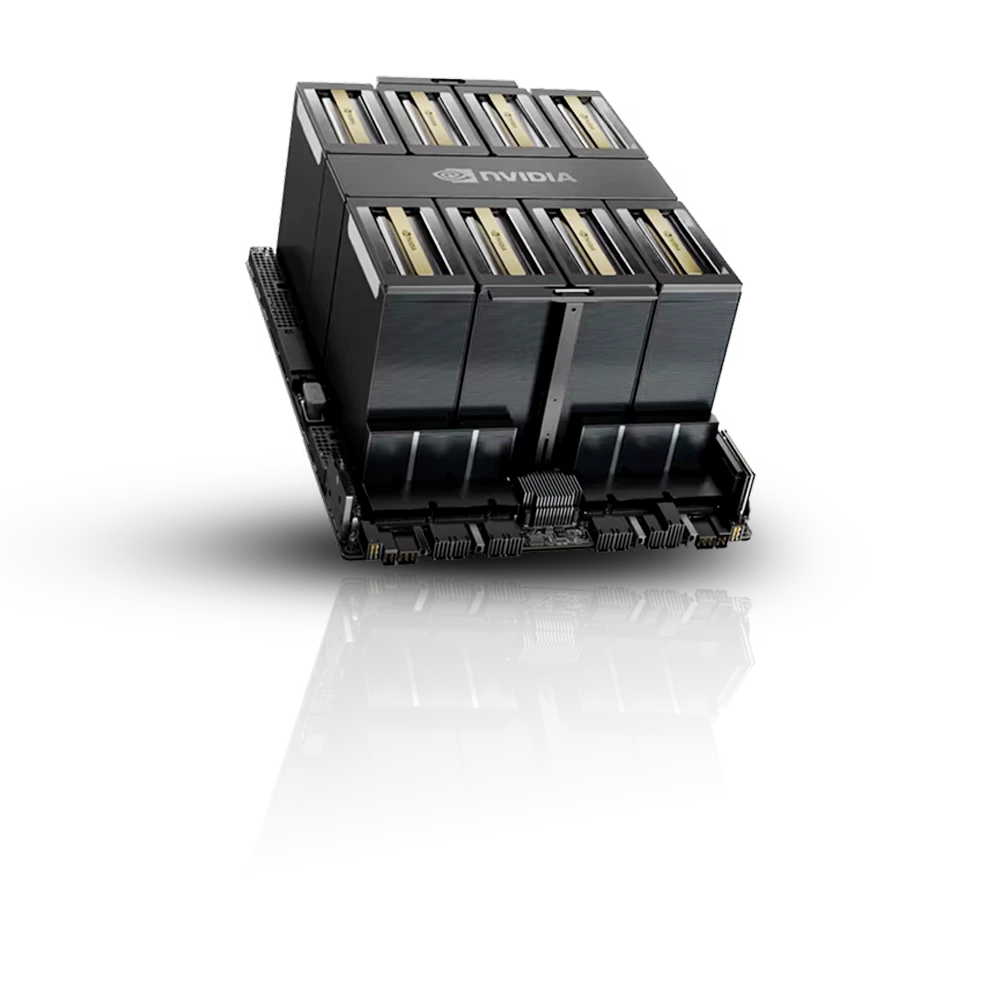
H200
UK
GPUAAS.COM · WHOLESALE GPU NETWORK / A HOSTED·AI SERVICE ◆ CAPACITY AVAILABLE · 20+ PARTNERSQUOTES < 24HREV 2026.09
+
+
◆
H200 SXM for AI agents
◆ AVAILABLE

H200
for AI agents
, at
wholesale price.

H200 SXM from vetted rental partners, sized for long-running agentic sessions with heavy context accumulation, at
~30% less than hyperscale. Quotes in under 24 hours.

HGX GPU node
GPU generations
4
Architectures
Hopper + Blackwell
Vetted partners
20+
Quote turnaround
24 hrs
Commitment
Short / long
QUOTES IN UNDER 24 HOURS VETTED PARTNERS WORLDWIDE SHORT OR LONG TERM COMMITMENT DIRECT OPERATOR CONTRACTS CAPACITY AVAILABLE NOW PLACEMENT YOU SPECIFY
◆ THE SHORT ANSWER

AI agent workloads benefit from H200's memory advantage in a specific, narrower way than inference generally: agents that maintain long conversation histories, extensive tool-call logs, or large retrieved context across a multi-step task can push against H100's 80GB faster than single-turn chat does, since all of that accumulated context sits in memory simultaneously. H200's 141GB gives real headroom for agents with long-running sessions or heavy context accumulation, and the same roughly 43% bandwidth increase that helps inference latency generally also helps keep per-call response times low as context grows. For most agentic workloads with moderate context and typical session lengths, H100 remains the practical default. H100 for AI agents handles typical multi-step tool-calling tasks just as well at a lower hourly rate.

+
01
PRICING

What H200 for AI agents actually costs

H200 median on-demand rate runs $4.40/hr across 31 tracked providers, ranging from $2.09 at the low end to $6.31 for specialist guaranteed-capacity providers. For typical agentic tasks, H100's lower rate usually wins; H200 pays off for long-running, context-heavy sessions. NVIDIA H200 pricing is quoted per enquiry; full NVIDIA H200 specs are available on request.

Market reference as of September 2026, quoted in USD. Total cost for agentic workloads depends heavily on average calls per task and concurrency, not just the hourly GPU rate.
Wholesale rates through GPUaaS.com are quoted per enquiry and vary by commitment term, configuration and placement.

$0$2.50$5$7.50$10$12.50$15/GPU-HR
Market low, 31 providers tracked
Cheapest tracked H200 SXM on-demand
$2.09
Median on-demand H200 SXM
Median across 31 tracked providers
$4.40
Market high, specialist providers
Premium providers, guaranteed capacity
$6.31
Hyperscaler on-demand
What you pay without a broker
$10.60
◆ GPUaaS.com wholesale
Vetted partners · direct operator contract
quoted per enquiry
H200 MARKET RATES, AUGUST 2026
+
02
◆
Where H200 earns its keep for AI agents

What H200 handles well for AI agents, and what to watch for.

Most agentic workloads don't need H200's extra memory, since a typical multi-step task with moderate context and a handful of tool calls comfortably fits within H100's 80GB. The case for H200 strengthens specifically for agents that accumulate large amounts of context over a long-running session: extensive conversation history, many tool-call outputs, or large retrieved documents all consume memory simultaneously as the session progresses, unlike single-turn chat interactions that don't accumulate state across separate requests. H200's 141GB directly extends how much accumulated context an agent can hold before hitting a memory ceiling, and the roughly 43% higher bandwidth helps keep per-call latency low even as that context grows, which matters given agentic tasks already compound latency across multiple sequential model calls.

/01

Long-running agentic sessions

141GB gives real headroom for agents with long conversation histories or heavy accumulated tool-call context across a session.
long sessions · 141GB · context accumulation
/02

Latency at scale as context grows

Roughly 43% more bandwidth keeps per-call latency low even as accumulated context grows across a multi-step agentic task.
bandwidth · latency · growing context
/03

Standard agentic tasks stay on H100

For typical multi-step tool-calling tasks with moderate context, H100 handles it just as well at a lower hourly rate.
H100 sufficient · typical tasks · moderate context
/04

Partitioning with more headroom

MIG partitioning works identically on H200, with each isolated instance carrying more usable memory than an equivalent H100 partition.
MIG · partitioning · more memory per instance
+
03
◆ LIVE NETWORK · 12 LOCATIONS

H200 capacity worldwide, in the location you need.

Agentic applications are often latency-sensitive end-to-end products, so placing GPU capacity close to your users matters. See H200 availability by country below.

Read the full guide to GPU cloud in this location →
4
GPU GENERATIONS
20+
VETTED PARTNERS
12
PLACEMENT OPTIONS
24h
QUOTE TURNAROUND
◆ USA◆ CAN◆ UK◆ DEU◆ FRA◆ NLD◆ UAE◆ SAU◆ IND◆ SGP◆ JPN◆ AUS
04
◆ COST COMPARISON

See how much you save at scale

Wholesale rates against cloud list price for a 64-GPU cluster.

CLUSTER SIZE
8 GPU Servers
64 × GPUS · 730 HRS/MO
ASSUMPTIONS · BLENDED $6.00/GPU-HR · INDICATIVE ONLY
SOURCEEST. MONTHLYVS GPUAAS
Retail cloud
On-demand list price · reserved discounts require lock-in
~$280k
+$84k
Direct datacentre negotiation
Long-term commitment · slow procurement cycle
~$230k
+$34k
◆ BEST VALUE
GPUaaS.com wholesale
Vetted partners · direct operator contract · quotes in 24 hours
~$196k
SAVE ~$84k/MO
Need single-GPU compute? packet.ai has you covered.
+
05
◆ HOW IT WORKS

A matchmaker, not a marketplace.

We connect you to our vetted partners. You contract directly with the operator running your nodes.

STEP 01/4
01

Tell us the requirement

GPU model, count, placement and timeline. Add workload detail if you have it.

STEP 02/4
02

We match capacity

We find vetted partners with capacity that fits, in the jurisdiction you need.

STEP 03/4
03

Quotes in 24 hours

Real quotes from partners who hold the capacity, not listings that may not exist.

STEP 04/4
04

Contract and provision

You contract directly with the operator. We smooth the provisioning process.

Get a quote
Request wholesale rates
in under 24 hours.

Tell us the essentials. We'll line up real quotes from our vetted wholesale partners, and you contract directly with the operator.

◆Quotes in under 24 hours
◆Direct contact with operators
◆Vetted partners, matched to your requirement
◆20+ vetted providers · 10 regions
1
ESSENTIALS
2
OPTIONAL
Contact
Full Name *
Business Email *
Organization *
Preferred Location *
Your Region *
Thank you! Your submission has been received!
Oops! Something went wrong while submitting the form.
GPU Requirements
GPU Model *
PRE-SELECTED
Number of GPUs *
Individual GPU count. 1 node = 8 GPUs.
Get the Best Deal→
Thank you! Your submission has been received!
Oops! Something went wrong while submitting the form.
+
06
◆ FAQ

Frequently Asked Questions

Q1
Do AI agents need H200's extra memory over H100?

H200 is worth considering specifically for agents that maintain long conversation histories or large accumulated tool-call context across a session, where H100's 80GB can become a real constraint. For typical multi-step agentic tasks with moderate context, H100 remains cost-effective.

Q2
Why would agentic context grow larger than typical chat context?

As an agent's session grows longer, accumulated conversation history, tool outputs, and retrieved context all consume memory simultaneously, unlike single-turn chat which generally doesn't accumulate context across separate requests. This makes long-running agentic sessions more likely to hit memory limits than typical chat inference.

Q3
Does H200's bandwidth advantage help with agentic latency specifically?

Yes. The same roughly 43% higher memory bandwidth that improves general inference latency also helps keep per-call response times low specifically as accumulated context grows, which matters for agents chaining many sequential model calls.

Q4
Does MIG partitioning work the same for agentic workloads on H200?

Yes, the same MIG partitioning mechanism works identically on H200, with each of the up to 7 isolated instances carrying more usable memory than an equivalent H100 partition, useful when serving several agentic workloads with different context requirements.

Q5
Should I default to H100 or H200 for agentic serving?

H100 remains the practical default for most agentic use cases, since typical multi-step tasks with moderate context don't push against its 80GB. H200 is worth the premium specifically for agents with long-running sessions or heavy context accumulation.

Q6
Does agentic serving on H200 need special interconnect infrastructure?

Not usually. Since most agentic workloads that need H200 are memory-bound by accumulated context rather than raw compute demand, the standard NVLink within a node is typically sufficient; multi-node InfiniBand matters more for large training clusters than single-card agentic serving.