Blog ▸ How to Build a GPU Procurement Strategy That Does Not Leave You Waiting 52 Weeks
GPU Infrastructure
Enterprises that secure GPU capacity in the next 90 days will have a real head start on teams still waiting. Four mistakes that turn a 90-day gap into a 5-month wait.
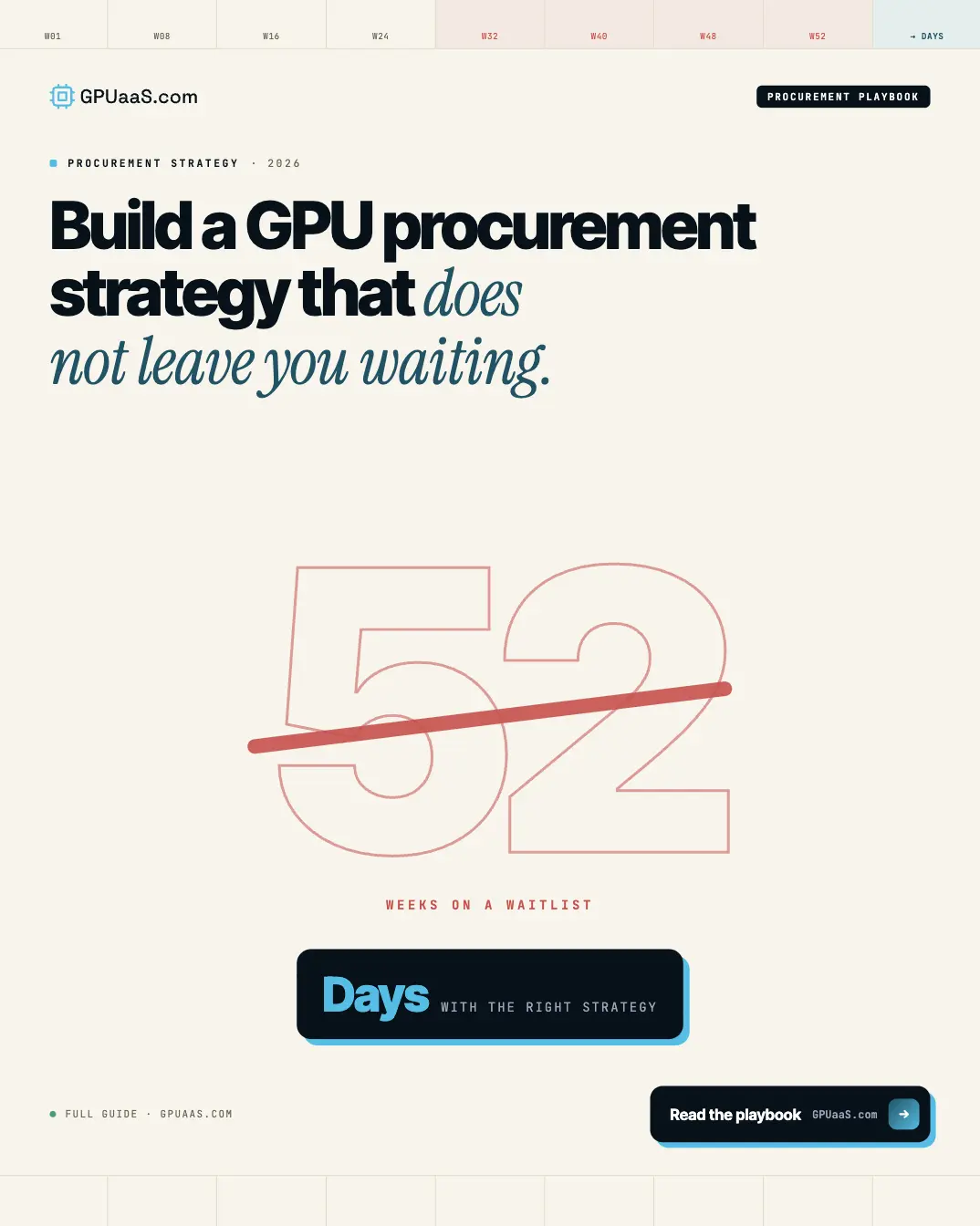
How to Build a GPU Procurement Strategy That Does Not Leave You Waiting 52 Weeks
GPUaaS.com Team
GPU Infrastructure
July 8, 2026
No items found.
A team started their GPU capacity conversation in March. Figured they had months. By June, the tier they'd priced in March had a 44-week lead time. The team that had the same conversation in January was already training.
Ninety days doesn't feel urgent until you're the one waiting.
Key takeaways
Blackwell-class hardware lead times have slipped into Q1 2027 for anyone not already in a queue. Reserved cloud capacity is booked six months out at major providers
Below 60% sustained utilization, the answer to a capacity request usually isn't more hardware, it's better allocation of what's already provisioned
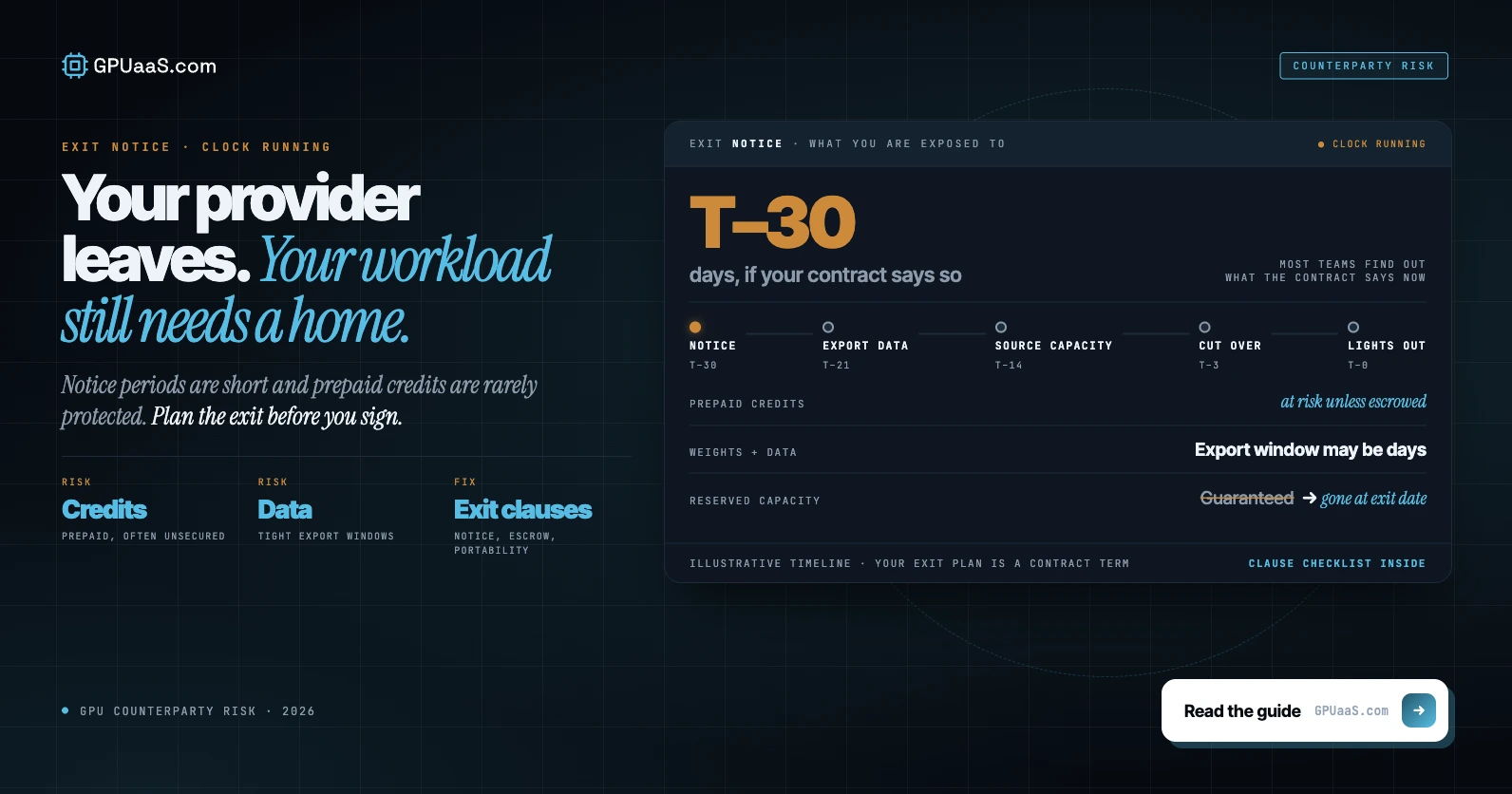
One provider relationship is a single point of failure. Building a second one before you need it is what turns a five-month wait into a nine-day move
Reserved commitment terms should max out around 12 months until a workload's utilization is proven, not locked in against assumptions that haven't been tested
Training, inference, and burst workloads need different procurement paths. Running all three through one reserved contract means overpaying on at least one of them
◆ WHY THE 90 DAYS MATTER
The gap doesn't close, it compounds
Blackwell lead times have slipped into Q1 2027 for anyone not already in a queue. Reserved cloud capacity is booked six months out at the major providers. Start when you need the GPUs, not before, and you're already behind teams that started 90 days earlier.
◆ MISTAKE 1: NOT KNOWING YOUR OWN NUMBER
Requesting more before checking what's already used
Most teams don't know their own utilization number before asking for more capacity. A team requesting a fourth cluster while running three at 35% utilization is solving the wrong problem. Nobody checks this first. They just ask for more. Below 60% sustained utilization, the answer isn't more hardware. It's better allocation of what's already there.
◆ MISTAKE 2: ONE PROVIDER RELATIONSHIP
A single point of failure with a good UI
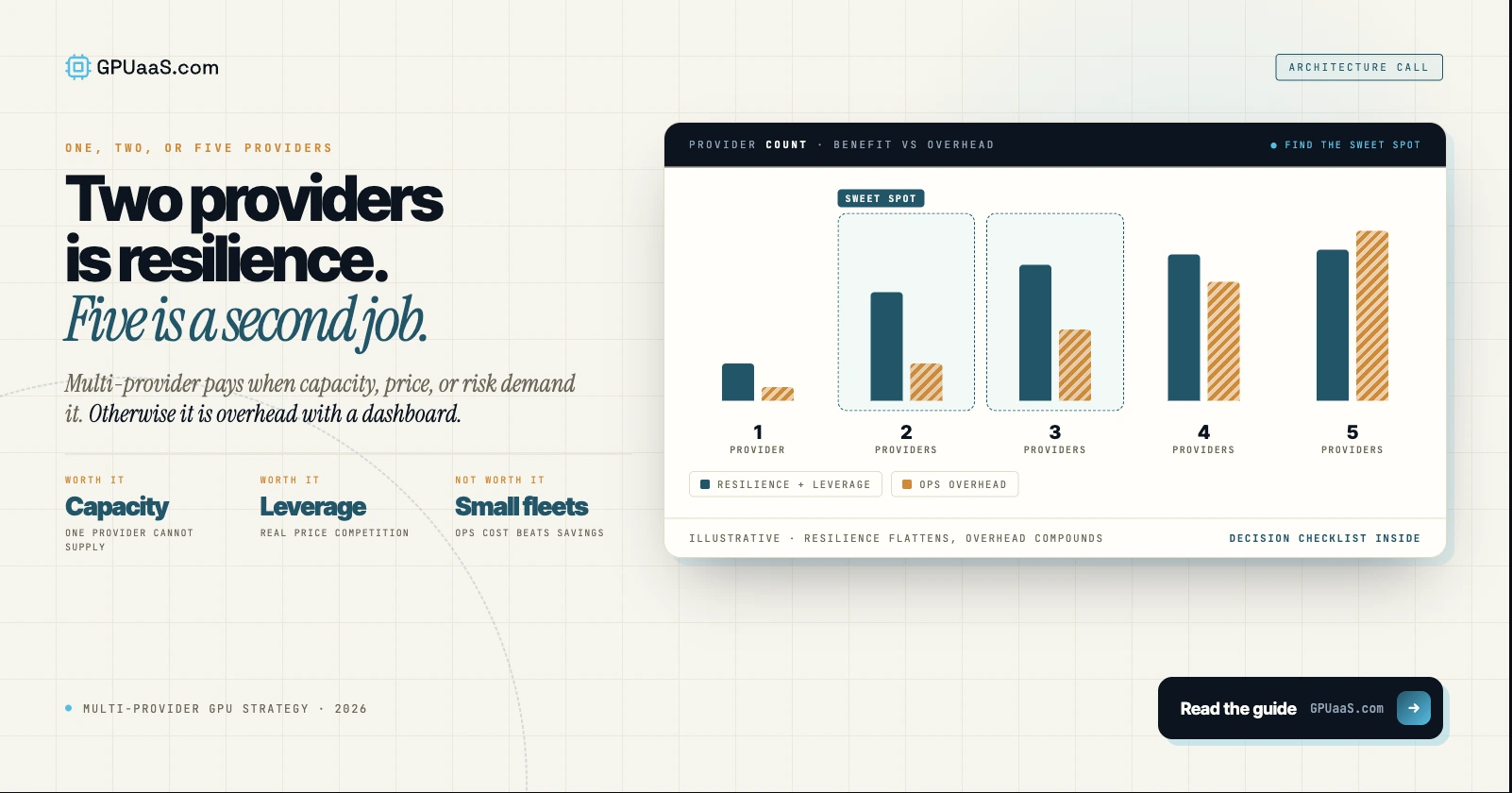
A team locked into one vendor found out in April that vendor's next slot was five months out. A team with two provider relationships already built moved the same workload to the second vendor in nine days. The relationship existing before the need is what made nine days possible. Building it after the need shows up means competing with everyone else who also waited.
◆ MISTAKE 3: LOCKING TERMS AGAINST UNPROVEN WORKLOADS
Where the real damage happens
Commitment terms get signed against workloads that haven't been validated, and that's where the damage happens. A team signed a three-year reserved contract for a model still in testing, betting the discount would pay off. Six months in, the workload changed shape. They kept paying for capacity built around assumptions that no longer held, for two and a half more years. Reserved terms should max out around 12 months until utilization proves itself. Past that, negotiate volume floors and exit provisions instead of locking in blind.
◆ MISTAKE 4: ONE PROCUREMENT PATH FOR EVERY WORKLOAD
Training, inference, and burst are not the same problem
Every workload doesn't need the same procurement path. Treating them the same wastes budget twice over. Training runs need dedicated capacity reserved when the run is scheduled, interconnect strong enough for multi-node distribution. Inference needs capacity placed close to where requests originate, scaled horizontally, no training-grade commitment overhead. Burst work needs short-term access that releases the moment the job finishes. A team running all three through the same year-long reserved contract pays training-grade prices for burst-grade usage on two thirds of what it runs.
◆ PROCUREMENT MOVES UPSTREAM
Part of the roadmap, not downstream of it
Procurement used to be downstream of the roadmap. IT figured it out after the plan was set. Lead times where they sit now move it upstream, into the same planning conversation as the roadmap itself. Treat hardware sourcing as something to sort out later, and the plan gets built around capacity that may not exist when it's needed.
Some enterprises already run procurement like a supply chain instead of a service request. Monthly capacity review. GPU-hours metered like a resource, not treated as unlimited. Finance and infrastructure in the same room reviewing allocation, the way they'd review a materials budget. Sounds like overhead. It's the difference between getting capacity in nine days and finding out in April you're five months out.
◆ WHAT LARGER ENTERPRISES ARE ALREADY DOING
Aggregated demand has leverage individual demand doesn't
A few enterprises have gone further. Procurement consortia, pooling demand across organizations to negotiate priority access directly. Not realistic for most teams. But the instinct behind it, that individual demand is weak and aggregated demand has leverage, scales down. A team that specs a workload once and shops it across several providers at the same time gets close to that same leverage without forming a consortium.
The mid-size version of this problem looks different from the frontier-lab version. A frontier lab can absorb a multi-month wait because the roadmap has room for it. A team shipping a feature this quarter cannot. Quota restrictions and multi-month waits hit smaller teams harder, because they have less room to just wait it out. That's why the 90-day head start matters more here than at a company with a five-year AI budget already locked in.
90 days
roughly how far ahead of a hardware order a team needs to be operating to avoid being the one still waiting when everyone else already has capacity
Modeled from 2026 GPU lead-time and reserved capacity booking data
The team that started in January had done four things by day 90 that the March team hadn't. Audited real utilization instead of assuming more was needed. Built a second provider relationship before needing one. Kept commitment terms under 12 months until usage was proven. Split procurement by workload type instead of buying one flavor of capacity for everything.
None of it required more budget. It required starting the clock 90 days earlier than the moment the need became obvious.
The 90-day window isn't a marketing number. It's roughly how far ahead of a hardware order a team needs to be to not be the one still waiting when everyone else already has capacity. Miss it, and the wait isn't 90 days anymore. It's however long the queue is by the time you start.
Build the relationship before you need it.
Submit a spec once, get quotes across multiple vetted providers within 24 hours. No buyer fees. For single GPUs, packet.ai handles self-serve access with 24/7 human support.
It roughly matches the gap between when reserved cloud capacity fills up at major providers and when a team without a plan finds itself locked out. Teams that start the clock 90 days before they actually need hardware are consistently able to move in days once capacity opens, rather than discovering a multi-month wait when the need becomes urgent.
Audit real utilization across existing clusters before requesting more. Below roughly 60% sustained utilization, the underlying problem is usually allocation, not scarcity. Requesting a new cluster while existing capacity sits underused solves the wrong problem and adds cost without fixing anything.
Around 12 months maximum until a workload's utilization is actually proven. Longer terms assume a level of stable, sustained usage that hasn't been demonstrated yet, and locking in a multi-year contract against an unvalidated workload risks paying for capacity that no longer fits once the workload changes.
No. Training needs dedicated capacity with strong multi-node interconnect, reserved for the duration of the run. Inference needs capacity placed close to request origin, scaled horizontally. Burst work needs short-term access that releases when the job finishes. Routing all three through one long-term reserved contract means overpaying on whichever workload doesn't match that commitment profile.
Submit a workload spec, GPU tier, count, duration, region, and GPUaaS returns quotes from vetted providers within 24 hours. That means a team can establish real, comparable provider options well ahead of an actual need, rather than starting the search once a deadline is already forcing the decision.
Last reviewed: 9 July 2026. Lead time and reserved capacity data from Spheron GPU Shortage 2026 report, VerticalData.io AI Supply Chain Constraints report, and Vamsi Talks Tech GPU Supply Chain Crisis 2026 analysis. Procurement framework data from SoftwareSeni GPU Procurement Strategy 2025-2026 report. Browse current GPU cluster availability on GPUaaS.com.