Blog ▸ The Procurement Checklist Every AI Team Should Use Before Committing to GPU Capacity
GPU Infrastructure
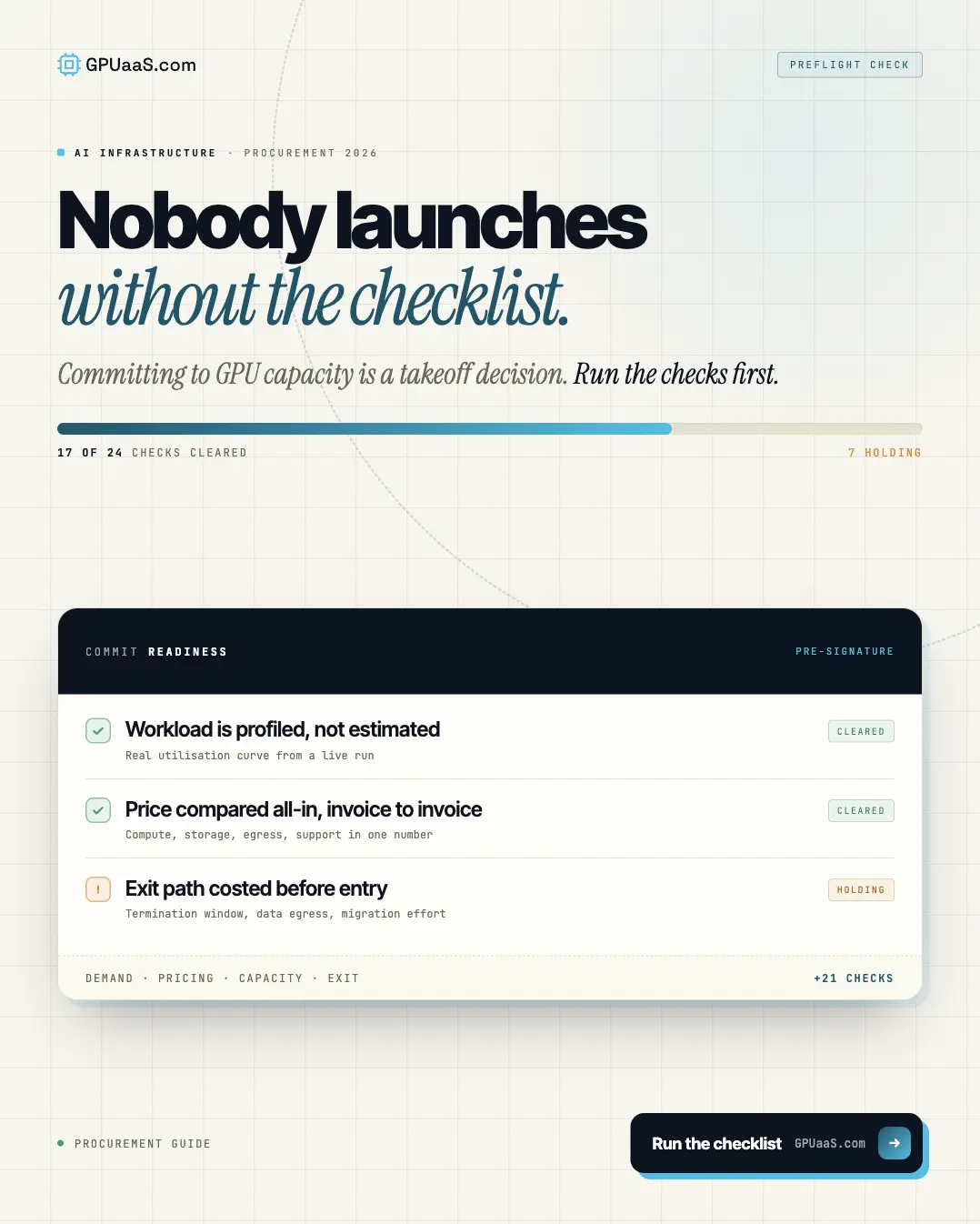
Workload fit, provider vetting, commitment term, exit clause. Four gates before you sign, and workload fit has to come first or the rest is negotiated blind.
The Procurement Checklist Every AI Team Should Use Before Committing to GPU Capacity
GPUaaS.com Team
GPU Infrastructure
August 5, 2026
No items found.
A team's H200 order got approved the day the allocation call came through, not the day anyone confirmed the workload needed H200. The chip arrived. Six weeks later, someone finally checked what it was running: a model that fit comfortably on an A100 the whole time.
That's not a rare mistake. Chip selection is turning into a routing decision made workload by workload, and most teams are still making it as a single generational purchase instead.
Key takeaways
Five questions about the actual workload, model, inference type, concurrency, context length, precision, should be answered before any vendor conversation starts
Interconnect requirement, not raw FLOPS need, is the biggest lever in matching a workload to the right GPU tier
At 80% utilization, a premium chip delivers better cost per token than an older one. At 5% utilization, that math inverts completely
A surprising share of premium GPU purchases happen because an allocation came through, not because the workload actually required that tier
Provider vetting, commitment term, and exit clause only matter once workload fit is settled first, otherwise a team is negotiating contract terms for hardware it never needed
◆ GATE 1: WORKLOAD FIT, ANSWER THESE FIRST
Question
Why it matters
Which model, and parameter count?
Sets the real memory floor
Online inference or batch?
Determines latency and interconnect needs
Peak concurrency or batch volume/hour?
Sizes the cluster, not just the chip
Maximum context length?
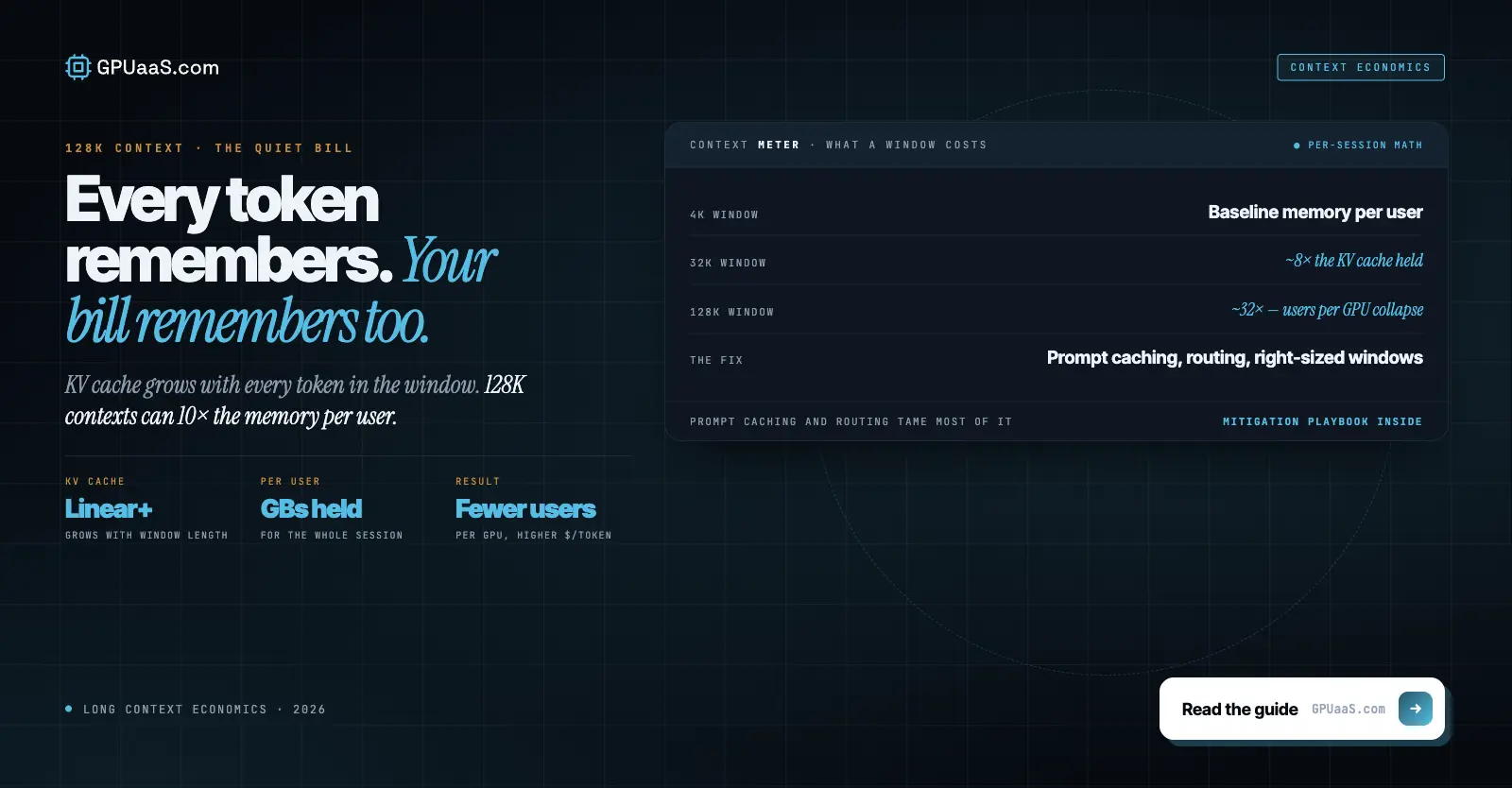
2K vs 128K tokens changes memory pressure entirely
FP16 required, or INT8/INT4 acceptable?
Can cut hardware requirements substantially
◆ INTERCONNECT IS THE REAL LEVER
Checked last by most buyers, matters most
Interconnect requirement matters more than almost anything else on a spec sheet, and it's the detail most buyers check last instead of first. A workload's real interconnect need, not its raw FLOPS need, is what should decide which SKU actually fits, because using the wrong interconnect class wastes capacity in a way that memory size or list price never will. A single-GPU inference job running standalone has no meaningful interconnect requirement at all. A multi-node training run absolutely does, and buying based on FLOPS alone while ignoring that leaves a team holding hardware that can't move data between GPUs fast enough to use the FLOPS it paid for.
◆ WHERE THE MISTAKE GETS EXPENSIVE
Utilization flips which chip actually wins
Utilization is where the workload-fit mistake gets expensive, and the mechanism is precise enough to name. At 80% utilization, a premium chip genuinely delivers better cost per token than an older one, since it's proportionally more powerful per hour than it is more expensive per hour. At 5% utilization, that math inverts completely. The premium chip compounds the waste instead of justifying the spend. Buying the newest generation while running it at low utilization is the single most expensive version of a workload-fit mistake, because the sticker price and the actual cost per useful output move in opposite directions from what the purchase decision assumed.
80% vs 5%
the utilization split where a premium chip's cost-per-token advantage completely inverts, from a genuine win at 80% to compounded waste at 5%
VentureBeat Q1 2026 AI Infrastructure and Compute Market Tracker
◆ GATES 2-4: ONLY MATTER AFTER GATE 1 IS SETTLED
Provider, commitment, exit
Once workload fit is settled, the remaining three gates matter, but they're a compliance and contract exercise rather than a technical one, and they deserve their own separate diligence pass. Provider vetting means checking exactly which product tier a compliance certification actually covers, confirming the company's operating history and stability, and getting real interconnect and storage bandwidth numbers instead of marketing language. Commitment term means matching contract length to how validated the workload actually is, not to whichever discount looked biggest on the page. Exit clause means locking in a real notice period and confirming the renewal structure doesn't quietly extend a short deal into a long one. All three get covered in detail in the vendor evaluation checklist; running that alongside a settled workload-fit answer is what actually closes the loop.
Skipping the workload-fit gate and jumping straight to vendor questions is how a team ends up negotiating hard over SLA terms and interconnect specs for a chip they never needed in the first place. The order matters as much as the content of each gate.
Get matched to the tier that fits, before you negotiate anything.
Submit a spec and get a quote within 24 hours. No buyer fees. For single GPUs, packet.ai handles self-serve access with 24/7 human support.
Which model and parameter count, whether it's online inference or batch processing, peak concurrency or batch volume, maximum context length, and whether FP16 quality is required or INT8/INT4 is acceptable. These five answers determine the real hardware requirement before any vendor conversation should start.
A workload's interconnect need, not its raw FLOPS need, decides which GPU tier actually fits. Buying based on compute power alone while ignoring interconnect can leave a team with hardware that can't move data between GPUs fast enough to use the compute it paid for, particularly on multi-node training workloads.
No. At high utilization, a premium chip's cost per token genuinely beats an older chip's. At low utilization, that advantage inverts and the premium chip compounds the waste instead. Buying the newest generation without confirming utilization will actually be high is one of the most expensive procurement mistakes a team can make.
Before. Vendor questions about compliance scope, commitment terms, and exit clauses only matter once the right GPU tier and cluster size have been confirmed. Skipping workload fit and going straight to vendor evaluation risks negotiating hard over contract terms for hardware that was never actually needed.
Submit a workload spec, model, concurrency, context length, region, and GPUaaS returns a quote for a tier that actually fits, within 24 hours, rather than defaulting to whichever GPU generation happens to be available first.
Last reviewed: 6 August 2026. Workload sizing framework from Marco Schneider's Right-Sizing GPU and Compute Infrastructure guide, March 2026. Interconnect-first procurement analysis from Prompt20's NVIDIA AI GPU Lineup 2026 guide. Utilization and chip-routing analysis from VentureBeat's Q1 2026 AI Infrastructure and Compute Market Tracker. Browse current GPU cluster availability on GPUaaS.com.