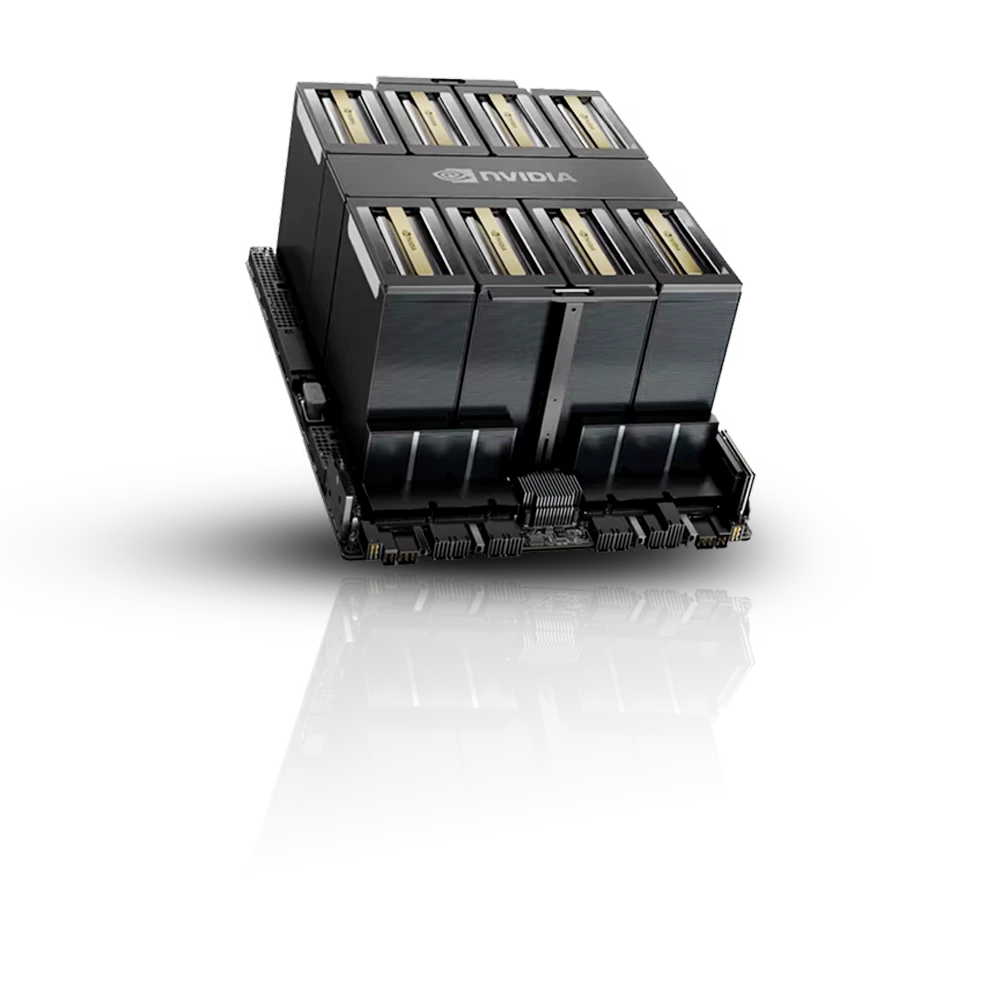
Video generation multiplies the compute and memory demands of image generation by the number of frames, since a diffusion-based video model has to maintain temporal consistency across a sequence rather than producing one independent frame. Where an image generation batch might need a handful of denoising passes, generating a few seconds of coherent video can require processing dozens of frames through similar denoising steps, often with additional temporal attention layers linking frames together. This is why video generation workloads push harder against GPU memory than most other usecases: 80GB of HBM3 on H100 gives meaningful headroom for the larger activation memory that temporal models need, though longer or higher-resolution clips can still require multi-GPU setups. H200 for video generation is often the more practical choice as clip length or resolution increases.
The core difference between video and image generation is temporal consistency: a video model has to keep the same subject, lighting, and motion coherent across every frame, which most architectures handle with temporal attention layers that reference multiple frames simultaneously. This pushes activation memory well beyond what a single-image diffusion model needs, since the network is effectively processing a batch of related frames at once rather than one independent image. H100's 80GB of HBM3 gives real headroom for shorter clips and moderate resolutions on a single card, while longer sequences, higher frame rates, or higher resolutions often need the model sharded across multiple H100s, using the same NVLink and InfiniBand interconnects that large language model training relies on.
Video generation renders can be long-running and bursty, so placing capacity close to where the workload actually runs matters. See H100 availability by country below.
Read the full guide to GPU cloud in this location →Wholesale rates against cloud list price for a 64-GPU cluster.
We connect you to our vetted partners. You contract directly with the operator running your nodes.
GPU model, count, placement and timeline. Add workload detail if you have it.
We find vetted partners with capacity that fits, in the jurisdiction you need.
Real quotes from partners who hold the capacity, not listings that may not exist.
You contract directly with the operator. We smooth the provisioning process.
Tell us the essentials. We'll line up real quotes from our vetted wholesale partners, and you contract directly with the operator.

GPUaaS.com connects enterprises with vetted GPU providers for large-scale compute at up to 30% lower cost than hyperscalers.


