{"@context":"https://schema.org","@graph":[{"@type":"Service","@id":"https://gpuaas.com/gpu-cloud-usecase-pillars/llm-inference#service","name":"GPU Cloud for LLM Inference","provider":{"@type":"Organization","name":"GPUaaS.com","url":"https://gpuaas.com"},"serviceType":"GPU cloud infrastructure","description":"Wholesale GPU capacity for LLM inference from vetted partners across H100, H200, B200, B300, GB300 and newer generations, in the placement you specify. Quotes in under 24 hours."},{"@type":"WebPage","@id":"https://gpuaas.com/gpu-cloud-usecase-pillars/llm-inference#webpage","url":"https://gpuaas.com/gpu-cloud-usecase-pillars/llm-inference","name":"GPU Cloud for LLM Inference","isPartOf":{"@type":"WebSite","name":"GPUaaS.com","url":"https://gpuaas.com"}},{"@type":"BreadcrumbList","@id":"https://gpuaas.com/gpu-cloud-usecase-pillars/llm-inference#breadcrumb","itemListElement":[{"@type":"ListItem","position":1,"name":"Home","item":"https://gpuaas.com"},{"@type":"ListItem","position":2,"name":"GPU Cloud","item":"https://gpuaas.com/cluster"},{"@type":"ListItem","position":3,"name":"GPU Cloud for LLM Inference","item":"https://gpuaas.com/gpu-cloud-usecase-pillars/llm-inference"}]},{"@type":"FAQPage","@id":"https://gpuaas.com/gpu-cloud-usecase-pillars/llm-inference#faq","mainEntity":[{"@type":"Question","name":"Which GPU is best for LLM inference?","acceptedAnswer":{"@type":"Answer","text":"Memory capacity and bandwidth, in that order. If your model and KV cache fit in one GPU's memory you avoid cross-GPU communication entirely. H100 at 80 GB, H200 at 141 GB and B200 at 192 GB each move that threshold, and all are available through the network."}},{"@type":"Question","name":"How much does GPU cloud for LLM inference cost?","acceptedAnswer":{"@type":"Answer","text":"As of 31 August 2026 the median on-demand H100 rate was $3.33 per GPU-hour across 40 providers, B200 averaged $7.63 and H200 sat around $4.40 to $4.55. Newer generations are quoted per enquiry."}},{"@type":"Question","name":"What is the KV cache and why does it decide my GPU choice?","acceptedAnswer":{"@type":"Answer","text":"The KV cache holds attention state for every token in the context window and grows with context length and batch size. At long context it frequently consumes more memory than the model weights."}},{"@type":"Question","name":"Does vLLM, TensorRT-LLM or TGI change what hardware I need?","acceptedAnswer":{"@type":"Answer","text":"All three run on any generation available through the network, so the serving stack rarely constrains the hardware choice."}},{"@type":"Question","name":"What capacity structure suits inference?","acceptedAnswer":{"@type":"Answer","text":"Inference is steady-state load, so dedicated capacity on a commitment term generally fits it better than anything short-lived. Commitment terms and configurations vary by operator."}},{"@type":"Question","name":"Where should inference capacity be placed?","acceptedAnswer":{"@type":"Answer","text":"Placement decides latency for your users and jurisdiction for their prompts, which are often personal data. Capacity is available in the jurisdiction you specify, contracted directly with the operator."}}]}]}
GPUAAS.COM · WHOLESALE GPU NETWORK / A HOSTED·AI SERVICE ◆ CAPACITY AVAILABLE · 20+ PARTNERSQUOTES < 24HREV 2026.09
+
+
GPU cloud for LLM inference · sized on throughput
◆ AVAILABLE

GPU cloud
for LLM inference
, at

wholesale price.

H100, H200, B200, B300, GB300, Vera Rubin and more from vetted partners, sized to your throughput and context length, at
~30% less than hyperscale. Quotes in under 24 hours.

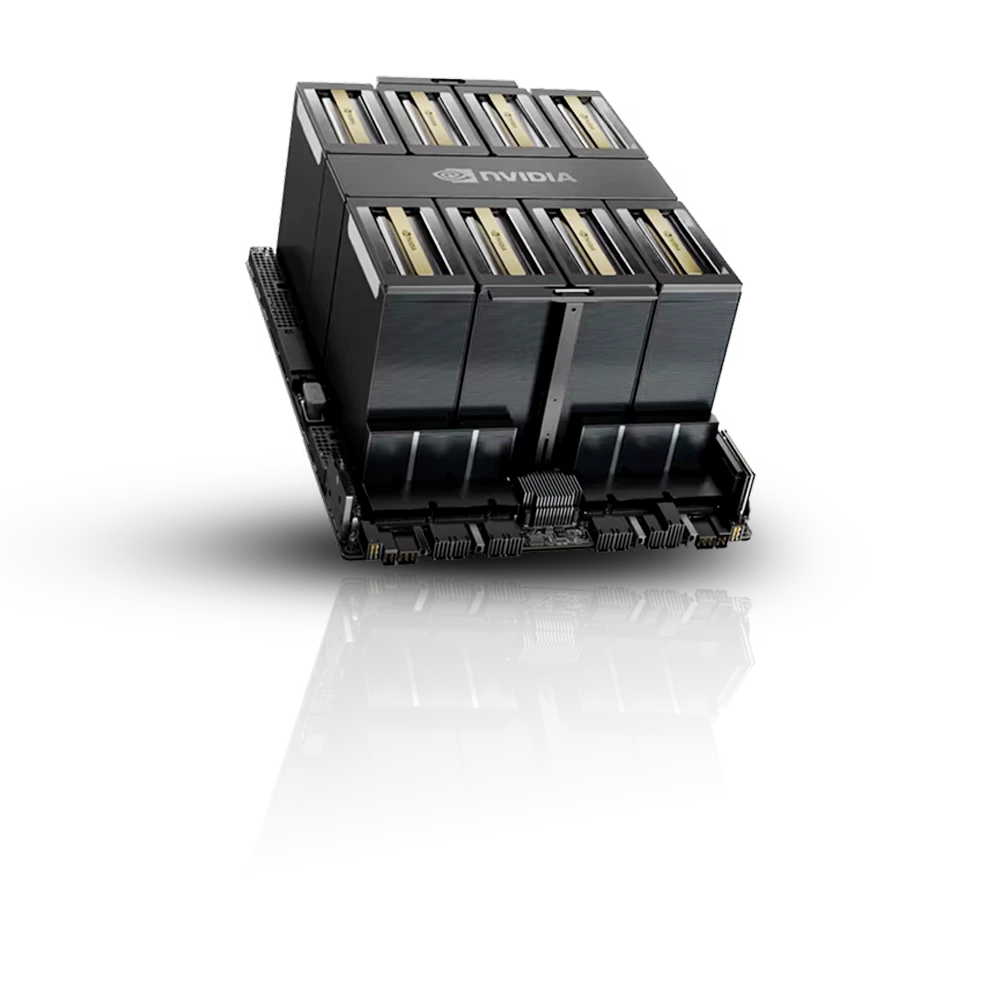
HGX GPU node
GPU generations
4
Architectures
Hopper + Blackwell
Vetted partners
20+
Quote turnaround
24 hrs
Commitment
Short / long
QUOTES IN UNDER 24 HOURS VETTED PARTNERS WORLDWIDE SHORT OR LONG TERM COMMITMENT DIRECT OPERATOR CONTRACTS CAPACITY AVAILABLE NOW PLACEMENT YOU SPECIFY
◆ THE SHORT ANSWER

Inference is the workload most GPU buyers underestimate. It runs continuously, it scales with users rather than with experiments, and its cost is decided by how many tokens per second you get out of each GPU-hour. H200 at 141 GB and B200 at 192 GB change what fits on a single node, which is usually what decides your cost per token. We have that capacity from vetted partners, at wholesale rates, in the placement you specify.

+
01
◆ PRICING

What inference capacity costs

Market reference ranges by generation, August 2026. Wholesale rates through GPUaaS.com are quoted per enquiry.

H100 SXM
80 GB · median across 40 providers
median $3.33
H200 SXM
141 GB · best cost per token under 141 GB
~$4.40-$4.55
B200 SXM
192 GB · average across 29 providers
avg $7.63
Hyperscaler on-demand
List pricing, egress extra
$9.36-$16.11
+
02
Where inference capacity earns its keep

What serving demands, workload by workload.

/01

Production model serving

Model serving for user-facing traffic where a failed request costs a customer. Single-node placement wherever the model fits, with headroom for peak concurrency.
vLLM · model serving · low latency
/02

Batch inference

Score large datasets where throughput matters and interruption does not. Cheaper and previous-generation silicon frequently wins here on cost per token.
Batch inference · offline scoring
/03

Long-context serving

Serve 128K context and beyond, including RAG pipelines, where the KV cache rather than the weights sets your memory floor.
128K+ context · KV cache · RAG
/04

Mixture-of-experts serving

Run mixture-of-experts models where total parameters far exceed active parameters, so memory capacity matters more than raw compute.
MoE · NVLink · tensor parallel
+
03
◆ LIVE NETWORK · 12 LOCATIONS

Vetted GPU partners worldwide, sized for serving.

Inference is placement-sensitive, because latency and prompt jurisdiction both follow the nodes. Tell us where you need the capacity and you contract directly with the operator running it.

4
GPU GENERATIONS
20+
VETTED PARTNERS
12
PLACEMENT OPTIONS
24h
QUOTE TURNAROUND
USA CAN UK DEU FRA NLD UAE SAU IND SGP JPN AUS
+
04
◆ HOW IT WORKS

A matchmaker, not a marketplace.

We connect you to our vetted partners. You contract directly with the operator running your nodes.

STEP 01/4
01

Tell us the requirement

GPU model, count, placement and timeline. Add workload detail if you have it.

STEP 02/4
02

We match capacity

We find vetted partners with capacity that fits, in the jurisdiction you need.

STEP 03/4
03

Quotes in 24 hours

Real quotes from partners who hold the capacity, not listings that may not exist.

STEP 04/4
04

Contract and provision

You contract directly with the operator. We smooth the provisioning process.

below hyperscale list. Same silicon, wholesale rates.
stop overpaying for compute.
~30%
◆ RATES VARY BY GENERATION, TERM AND PLACEMENT
+
05
◆ FAQ

Frequently Asked Questions

Q1
Which GPU is best for LLM inference?

Memory capacity and bandwidth, in that order. If your model and KV cache fit in one GPU's memory you avoid cross-GPU communication entirely, which is the single biggest throughput gain available. H100 at 80 GB, H200 at 141 GB and B200 at 192 GB each move that threshold, and B300, GB300 and Vera Rubin move it further. All of those generations are available through the network.

Q2
How much does GPU cloud for LLM inference cost?

Work in cost per million tokens, not cost per GPU-hour. As of 31 August 2026 the median on-demand H100 rate was $3.33 per GPU-hour across 40 providers, B200 averaged $7.63 and H200 sat around $4.40 to $4.55. Newer generations are quoted per enquiry. A B200 at double the hourly rate is cheaper per token if it delivers more than double the throughput for your model, which it often does on long context and FP4-quantised serving.

Q3
What is the KV cache and why does it decide my GPU choice?

The KV cache holds attention state for every token in the context window, and it grows with context length and batch size. At long context it frequently consumes more memory than the model weights, which is why a 70B model that looks like it fits in 80 GB stalls in production. Sizing capacity without accounting for KV cache is the most common reason a deployment underperforms its benchmark.

Q4
Does vLLM, TensorRT-LLM or TGI change what hardware I need?

vLLM is the most widely deployed, with paged attention and continuous batching that raise throughput substantially over naive serving. TensorRT-LLM extracts more from NVIDIA hardware if you are willing to compile per model. Text Generation Inference sits between them for ease of deployment. All three run on any generation we place, so the serving stack rarely constrains the hardware choice.

Q5
What capacity structure suits inference?

Inference is steady-state load, so dedicated capacity on a commitment term generally fits it better than anything short-lived: you are paying for hours you actually use, and there is no eviction risk on user-facing traffic. Commitment terms and configurations vary by operator.

Q6
Where should inference capacity be placed?

Placement decides latency for your users and jurisdiction for their prompts. Prompts and responses are often personal data, so inference is the workload where residency rules bite hardest, more so than training. Tell us the jurisdiction you need and we return rates for capacity there, contracted directly with the operator.

◆ GET A QUOTE
Request wholesale rates

in under 24 hours.

Tell us the essentials. We'll line up real quotes from our vetted wholesale partners, and you contract directly with the operator.

Quotes in under 24 hours
Direct contact with operators
Vetted partners, matched to your requirement
20+ vetted providers · 10 regions
Contact
Full Name *
Business Email *
Organization *
Thank you! Your submission has been received!
Oops! Something went wrong while submitting the form.
GPU Requirements
GPU Model *
PRE-SELECTED
Number of GPUs *
Individual GPU count. 1 node = 8 GPUs.
Get the Best Deal
Thank you! Your submission has been received!
Oops! Something went wrong while submitting the form.