{"@context":"https://schema.org","@graph":[{"@type":"Service","@id":"https://gpuaas.com/gpu-cloud-usecase-pillars/image-generation#service","name":"GPU Cloud for Image Generation","provider":{"@type":"Organization","name":"GPUaaS.com","url":"https://gpuaas.com"},"serviceType":"GPU cloud infrastructure","description":"Wholesale GPU capacity for SDXL, Flux and diffusion pipelines from vetted partners, RTX-class through B200, in the placement you specify."},{"@type":"WebPage","@id":"https://gpuaas.com/gpu-cloud-usecase-pillars/image-generation#webpage","url":"https://gpuaas.com/gpu-cloud-usecase-pillars/image-generation","name":"GPU Cloud for Image Generation","isPartOf":{"@type":"WebSite","name":"GPUaaS.com","url":"https://gpuaas.com"}},{"@type":"BreadcrumbList","@id":"https://gpuaas.com/gpu-cloud-usecase-pillars/image-generation#breadcrumb","itemListElement":[{"@type":"ListItem","position":1,"name":"Home","item":"https://gpuaas.com"},{"@type":"ListItem","position":2,"name":"GPU Cloud","item":"https://gpuaas.com/cluster"},{"@type":"ListItem","position":3,"name":"GPU Cloud for Image Generation","item":"https://gpuaas.com/gpu-cloud-usecase-pillars/image-generation"}]},{"@type":"FAQPage","@id":"https://gpuaas.com/gpu-cloud-usecase-pillars/image-generation#faq","mainEntity":[{"@type":"Question","name":"Which GPU is best for image generation?","acceptedAnswer":{"@type":"Answer","text":"Usually not the newest one. SDXL and Flux-class models fit comfortably in 24 to 48 GB, so an H100 or RTX-class card often beats a B200 on cost per image. RTX-class through B200 are all available through the network."}},{"@type":"Question","name":"How much does image generation cost per image?","acceptedAnswer":{"@type":"Answer","text":"Work in cost per thousand images rather than per GPU-hour. The median on-demand H100 rate was $3.33 per GPU-hour across 40 providers as of 31 August 2026, and a tuned SDXL pipeline generates in seconds."}},{"@type":"Question","name":"Can I serve multiple LoRAs from one GPU?","acceptedAnswer":{"@type":"Answer","text":"Yes, and it is the strongest argument for memory headroom on this workload. Holding many adapters alongside the base model avoids reloading weights between requests."}},{"@type":"Question","name":"Do ComfyUI and Diffusers run on this capacity?","acceptedAnswer":{"@type":"Answer","text":"ComfyUI, Diffusers and Automatic1111 all run on the generations available through the network."}},{"@type":"Question","name":"What commitment term suits generation work?","acceptedAnswer":{"@type":"Answer","text":"Catalogue and dataset work runs in batches, while user-facing generation needs capacity standing ready, so the two usually suit different commitment terms. Terms vary by operator."}},{"@type":"Question","name":"Does placement matter for image generation?","acceptedAnswer":{"@type":"Answer","text":"Yes, for two reasons: latency where users wait on generation, and rights, because training data and generated outputs both carry jurisdictional questions. Capacity is available in the jurisdiction you specify."}}]}]}
GPUAAS.COM · WHOLESALE GPU NETWORK / A HOSTED·AI SERVICE ◆ CAPACITY AVAILABLE · 20+ PARTNERSQUOTES < 24HREV 2026.09
+
+
GPU cloud for image generation · throughput per dollar
◆ AVAILABLE

GPU cloud
for image generation
, at

wholesale price.

H100, H200, B200, RTX Pro 6000 and more from vetted partners, sized on throughput per dollar rather than on memory you will not use, at
~30% less than hyperscale. Quotes in under 24 hours.

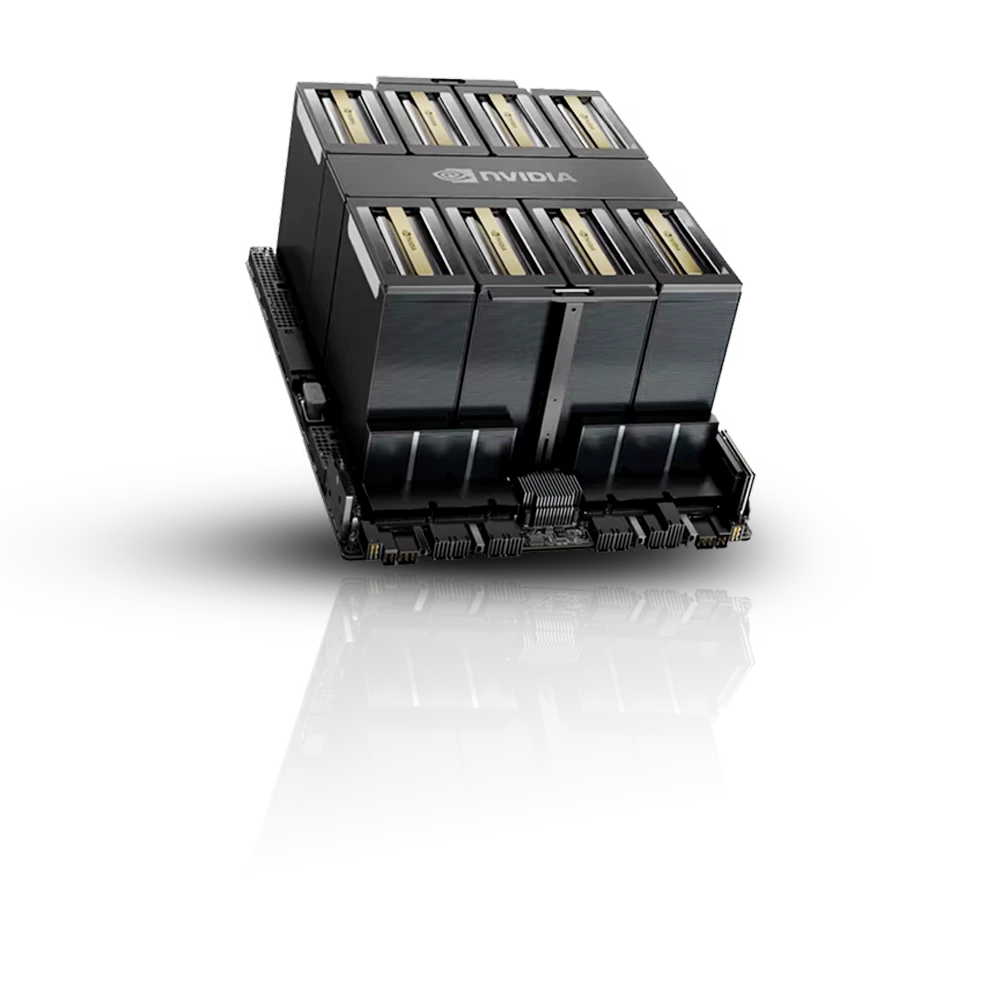
HGX GPU node
GPU generations
4
Architectures
Hopper + Blackwell
Vetted partners
20+
Quote turnaround
24 hrs
Commitment
Short / long
QUOTES IN UNDER 24 HOURS VETTED PARTNERS WORLDWIDE SHORT OR LONG TERM COMMITMENT DIRECT OPERATOR CONTRACTS CAPACITY AVAILABLE NOW PLACEMENT YOU SPECIFY
◆ THE SHORT ANSWER

Image generation is the workload where GPU choice is least intuitive. Diffusion models are far smaller than language models, so memory capacity rarely binds. What binds is throughput per dollar, because you are generating thousands of images rather than answering one prompt at a time. That makes mid-tier and previous-generation silicon frequently the cheapest correct answer for this workload.

+
01
◆ MEMORY AND RATES

What each generation offers, and costs

Diffusion rarely needs the largest memory. Market reference ranges as of August 2026, quoted in USD.

H100 SXM
80 GB · comfortable for SDXL and Flux
median $3.33/hr
RTX Pro 6000
96 GB · often the cheapest per image
lower hourly rate
H200 SXM
141 GB · headroom for many concurrent LoRAs
~$4.40-$4.55/hr
B200 SXM
192 GB · rarely necessary for diffusion alone
avg $7.63/hr
+
02
Where generation capacity earns its keep

Where diffusion workloads actually spend your money.

/01

Production text to image

Serve Stable Diffusion, SDXL or Flux to users where latency is visible and a dropped request is a lost customer. Dedicated capacity with headroom for peak concurrency.
Stable Diffusion · SDXL · Flux
/02

Batch and catalogue generation

Generate at volume for catalogues, variants and synthetic datasets, where throughput per dollar decides the bill and a retry costs little.
Batch · text to image · high volume
/03

Style and LoRA training

Train style and subject LoRAs on your own material with DreamBooth or Kohya. Short runs that rarely need the newest silicon.
LoRA training · DreamBooth · Kohya
/04

Multi-adapter serving

Serve many styles or customers from one node by holding multiple adapters in memory alongside the base model, avoiding reload latency between requests.
Multi-LoRA · ComfyUI · Automatic1111
+
03
◆ LIVE NETWORK · 12 LOCATIONS

Vetted GPU partners worldwide, sized for generation throughput.

Image generation is latency-sensitive at the front end and rights-sensitive at the training end. Tell us where you need the capacity and you contract directly with the operator running it.

4
GPU GENERATIONS
20+
VETTED PARTNERS
12
PLACEMENT OPTIONS
24h
QUOTE TURNAROUND
USA CAN UK DEU FRA NLD UAE SAU IND SGP JPN AUS
+
04
◆ HOW IT WORKS

A matchmaker, not a marketplace.

We connect you to our vetted partners. You contract directly with the operator running your nodes.

STEP 01/4
01

Tell us the requirement

GPU model, count, placement and timeline. Add workload detail if you have it.

STEP 02/4
02

We match capacity

We find vetted partners with capacity that fits, in the jurisdiction you need.

STEP 03/4
03

Quotes in 24 hours

Real quotes from partners who hold the capacity, not listings that may not exist.

STEP 04/4
04

Contract and provision

You contract directly with the operator. We smooth the provisioning process.

below hyperscale list. Same silicon, wholesale rates.
stop overpaying for compute.
~30%
◆ RATES VARY BY GENERATION, TERM AND PLACEMENT
+
05
◆ FAQ

Frequently Asked Questions

Q1
Which GPU is best for image generation?

Usually not the newest one. SDXL and Flux-class models fit comfortably in 24 to 48 GB, so an H100 or an RTX-class card often beats a B200 on cost per image. The exception is very high resolution, video-adjacent work, or serving many concurrent LoRAs, where memory headroom starts to matter. RTX-class through B200 are all available through the network.

Q2
How much does image generation cost per image?

Work in cost per thousand images, not per GPU-hour. Market-wide the median on-demand H100 rate was $3.33 per GPU-hour across 40 providers as of 31 August 2026, and a well-tuned SDXL pipeline produces images in seconds rather than minutes. For most buyers the sensible metric is throughput per dollar at your target resolution and step count.

Q3
Can I serve multiple LoRAs from one GPU?

Yes, and it is one of the strongest arguments for dedicated capacity. Holding many LoRAs in memory alongside the base model lets you serve multiple styles or customers from one node without reloading weights, which is where memory capacity finally starts to earn its price on this workload.

Q4
Do you support ComfyUI and Diffusers?

ComfyUI for pipeline work and node-based workflows, Diffusers for programmatic serving, and Automatic1111 where teams already have it embedded. All three run on any generation we place. If you are running ComfyUI in production rather than for experimentation, tell us, because the concurrency pattern changes the sizing.

Q5
What commitment term suits generation work?

Catalogue and dataset work runs in batches, while user-facing generation needs capacity standing ready, so the two usually suit different commitment terms. Terms vary by operator.

Q6
Does placement matter for image generation?

Yes, for two reasons. Latency, if your users wait on generation. And rights, because training data and generated outputs both carry jurisdictional questions, particularly where the training set includes personal or licensed material. Tell us the jurisdiction you need and we return rates for capacity there.

◆ GET A QUOTE
Request wholesale rates

in under 24 hours.

Tell us the essentials. We'll line up real quotes from our vetted wholesale partners, and you contract directly with the operator.

Quotes in under 24 hours
Direct contact with operators
Vetted partners, matched to your requirement
20+ vetted providers · 10 regions
Contact
Full Name *
Business Email *
Organization *
Thank you! Your submission has been received!
Oops! Something went wrong while submitting the form.
GPU Requirements
GPU Model *
PRE-SELECTED
Number of GPUs *
Individual GPU count. 1 node = 8 GPUs.
Get the Best Deal
Thank you! Your submission has been received!
Oops! Something went wrong while submitting the form.