{"@context":"https://schema.org","@graph":[{"@type":"Service","@id":"https://gpuaas.com/gpu-cloud-usecase-pillars/fine-tuning#service","name":"GPU Cloud for Fine-tuning","provider":{"@type":"Organization","name":"GPUaaS.com","url":"https://gpuaas.com"},"serviceType":"GPU cloud infrastructure","description":"Wholesale single-node and multi-node GPU capacity for LoRA, QLoRA and full fine-tuning, from vetted partners across H100, H200, B200 and newer generations."},{"@type":"WebPage","@id":"https://gpuaas.com/gpu-cloud-usecase-pillars/fine-tuning#webpage","url":"https://gpuaas.com/gpu-cloud-usecase-pillars/fine-tuning","name":"GPU Cloud for Fine-tuning","isPartOf":{"@type":"WebSite","name":"GPUaaS.com","url":"https://gpuaas.com"}},{"@type":"BreadcrumbList","@id":"https://gpuaas.com/gpu-cloud-usecase-pillars/fine-tuning#breadcrumb","itemListElement":[{"@type":"ListItem","position":1,"name":"Home","item":"https://gpuaas.com"},{"@type":"ListItem","position":2,"name":"GPU Cloud","item":"https://gpuaas.com/cluster"},{"@type":"ListItem","position":3,"name":"GPU Cloud for Fine-tuning","item":"https://gpuaas.com/gpu-cloud-usecase-pillars/fine-tuning"}]},{"@type":"FAQPage","@id":"https://gpuaas.com/gpu-cloud-usecase-pillars/fine-tuning#faq","mainEntity":[{"@type":"Question","name":"Which GPU do I need to fine-tune an LLM?","acceptedAnswer":{"@type":"Answer","text":"Method decides hardware. QLoRA on a quantised base fits far smaller footprints than a full fine-tune, so an H100 at 80 GB or H200 at 141 GB often does what people assume needs a cluster. All configurations are available through the network."}},{"@type":"Question","name":"How much does it cost to fine-tune a model?","acceptedAnswer":{"@type":"Answer","text":"The median on-demand H100 rate was $3.33 per GPU-hour across 40 providers as of 31 August 2026, and a LoRA run on a mid-size model is usually measured in GPU-hours rather than GPU-weeks."}},{"@type":"Question","name":"What is the difference between LoRA, QLoRA and full fine-tuning?","acceptedAnswer":{"@type":"Answer","text":"LoRA trains small adapters with base weights frozen. QLoRA adds quantisation of the frozen base to cut memory further. Full fine-tuning updates every weight and needs memory for optimiser states."}},{"@type":"Question","name":"Which fine-tuning frameworks run on this capacity?","acceptedAnswer":{"@type":"Answer","text":"Axolotl, Unsloth and HuggingFace PEFT all run on the generations available through the network, so the framework rarely dictates the hardware."}},{"@type":"Question","name":"What commitment term suits fine-tuning?","acceptedAnswer":{"@type":"Answer","text":"Runs are usually measured in hours or days rather than weeks, so a short commitment term generally fits better than a long one. Terms vary by operator."}},{"@type":"Question","name":"Does placement matter for fine-tuning?","acceptedAnswer":{"@type":"Answer","text":"More than for pretraining. Fine-tuning corpora are usually proprietary or regulated and the adapter encodes them, so the run inherits the corpus obligations. Capacity is available in the jurisdiction you specify."}}]}]}
GPUAAS.COM · WHOLESALE GPU NETWORK / A HOSTED·AI SERVICE ◆ CAPACITY AVAILABLE · 20+ PARTNERSQUOTES < 24HREV 2026.09
+
+
GPU cloud for fine-tuning · LoRA to full runs
◆ AVAILABLE

GPU cloud
for fine-tuning
, at

wholesale price.

H100, H200, B200, B300, GB300, Vera Rubin and more from vetted partners, sized to your method rather than to a rack diagram, at
~30% less than hyperscale. Quotes in under 24 hours.

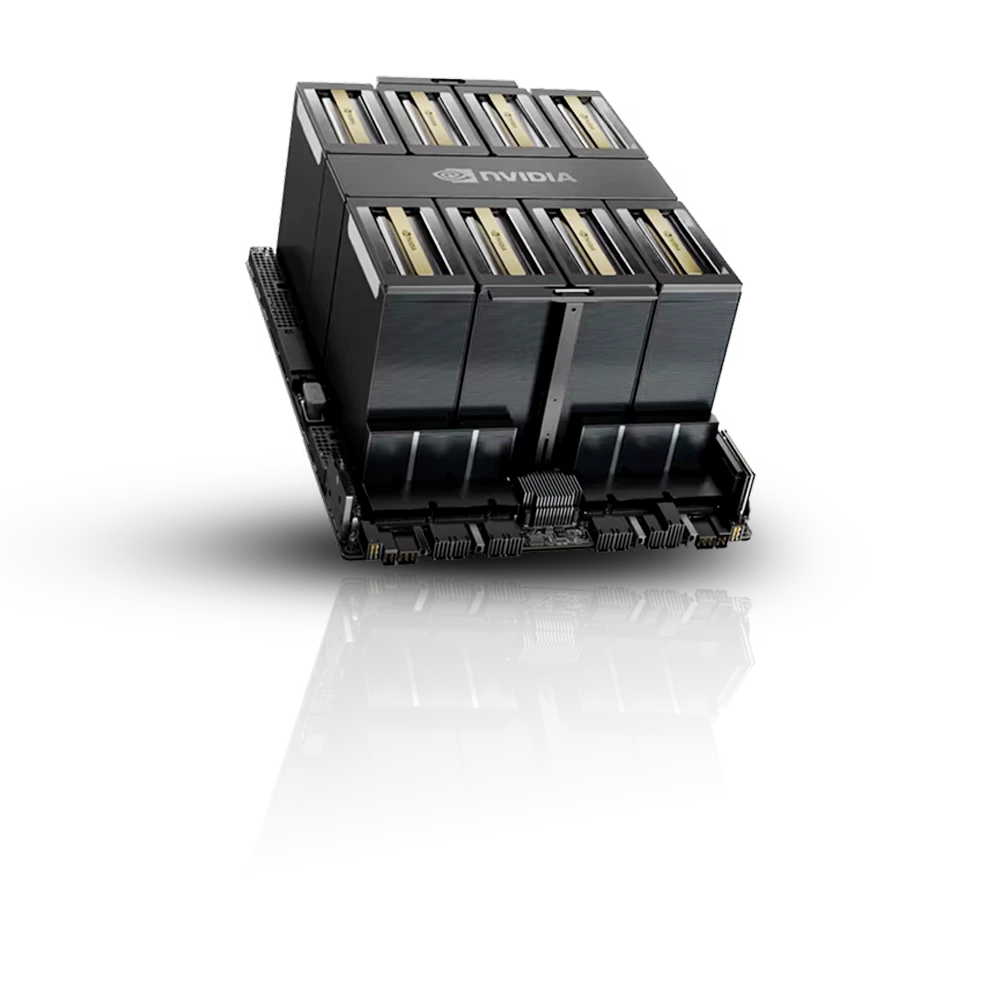
HGX GPU node
GPU generations
4
Architectures
Hopper + Blackwell
Vetted partners
20+
Quote turnaround
24 hrs
Commitment
Short / long
QUOTES IN UNDER 24 HOURS VETTED PARTNERS WORLDWIDE SHORT OR LONG TERM COMMITMENT DIRECT OPERATOR CONTRACTS CAPACITY AVAILABLE NOW PLACEMENT YOU SPECIFY
◆ THE SHORT ANSWER

Fine-tuning is the cheapest serious GPU workload to get right. LoRA and QLoRA cut the memory requirement so far that a 70B model can be adapted on a single node rather than a cluster, which changes the cost by an order of magnitude. The decision that matters is not which GPU but which method, because that sets your memory floor. We have single-node and multi-node capacity from vetted partners for either.

+
01
◆ RUN COST

What each method costs to run

The method sets your memory floor, and the memory floor sets your bill. Wholesale rates through GPUaaS.com are quoted per enquiry.

QLoRA on one H100
Quantised base, adapters only
cheapest
LoRA on one H200
141 GB removes most memory pressure
low
LoRA across two nodes
Larger base model, adapters only
moderate
Full fine-tune, multi-node
Optimiser states need several times model size
highest
+
02
Where fine-tuning capacity earns its keep

What each fine-tuning method demands of the hardware.

/01

LoRA adaptation

Adapt a mid-size model on a single node with frozen base weights and small trainable adapters. Usually the cheapest route to a production-quality domain model.
LoRA · PEFT · single node
/02

QLoRA on constrained memory

Quantise the frozen base to fit larger models into smaller memory footprints, trading a little fidelity for a large cost reduction on constrained budgets.
QLoRA · 4-bit · Unsloth
/03

Full fine-tuning

Update every weight where domain shift is too large for adapters. Needs multi-node with fast interconnect and memory headroom for optimiser states.
Full fine-tune · multi-node · FSDP
/04

Preference tuning

Align model behaviour with DPO or reward modelling, where the run is short but the iteration count is high and reproducibility matters.
DPO · RLHF · preference data
+
03
◆ LIVE NETWORK · 12 LOCATIONS

Vetted GPU partners worldwide, sized for adaptation runs.

Fine-tuning corpora are usually proprietary, and the adapter inherits their obligations. Tell us the jurisdiction you need and you contract directly with the operator running the nodes.

4
GPU GENERATIONS
20+
VETTED PARTNERS
12
PLACEMENT OPTIONS
24h
QUOTE TURNAROUND
USA CAN UK DEU FRA NLD UAE SAU IND SGP JPN AUS
+
04
◆ HOW IT WORKS

A matchmaker, not a marketplace.

We connect you to our vetted partners. You contract directly with the operator running your nodes.

STEP 01/4
01

Tell us the requirement

GPU model, count, placement and timeline. Add workload detail if you have it.

STEP 02/4
02

We match capacity

We find vetted partners with capacity that fits, in the jurisdiction you need.

STEP 03/4
03

Quotes in 24 hours

Real quotes from partners who hold the capacity, not listings that may not exist.

STEP 04/4
04

Contract and provision

You contract directly with the operator. We smooth the provisioning process.

below hyperscale list. Same silicon, wholesale rates.
stop overpaying for compute.
~30%
◆ RATES VARY BY GENERATION, TERM AND PLACEMENT
+
05
◆ FAQ

Frequently Asked Questions

Q1
Which GPU do I need to fine-tune an LLM?

Method decides hardware. QLoRA on a quantised base model fits far smaller footprints than a full fine-tune of the same model, so an H100 at 80 GB or H200 at 141 GB often does what people assume needs a cluster. Full fine-tuning of a large model still needs multi-node with fast interconnect. All of those configurations are available through the network.

Q2
How much does it cost to fine-tune a model?

Less than most buyers expect. Market-wide the median on-demand H100 rate was $3.33 per GPU-hour across 40 providers as of 31 August 2026, and a LoRA run on a mid-size model is usually measured in GPU-hours rather than GPU-weeks. The larger cost is normally the experimentation cycle rather than the final run.

Q3
What is the difference between LoRA, QLoRA and full fine-tuning?

LoRA trains small adapter matrices while the base weights stay frozen, which cuts trainable parameters dramatically. QLoRA adds quantisation of the frozen base, cutting memory further at some cost to fidelity. Full fine-tuning updates every weight and needs memory for optimiser states, which is typically several times the model size. Most production adaptation uses LoRA or QLoRA.

Q4
Which fine-tuning frameworks do you support?

Axolotl and Unsloth cover most workflows, with HuggingFace PEFT underneath. Unsloth is notably efficient on single-GPU runs. For preference tuning, DPO has largely displaced full RLHF for cost reasons. All of these run on any generation we place, so the framework rarely dictates the hardware.

Q5
What commitment term suits fine-tuning?

Runs are usually measured in hours or days rather than weeks, so a short commitment term generally fits fine-tuning better than a long one, and you avoid paying for capacity standing idle between experiments. Terms vary by operator.

Q6
Does placement matter for fine-tuning?

It matters more than for pretraining. Fine-tuning corpora are usually proprietary or regulated, and the resulting adapter encodes them, so the run inherits the corpus obligations. Tell us the jurisdiction you need and we return rates for capacity there.

◆ GET A QUOTE
Request wholesale rates

in under 24 hours.

Tell us the essentials. We'll line up real quotes from our vetted wholesale partners, and you contract directly with the operator.

Quotes in under 24 hours
Direct contact with operators
Vetted partners, matched to your requirement
20+ vetted providers · 10 regions
Contact
Full Name *
Business Email *
Organization *
Thank you! Your submission has been received!
Oops! Something went wrong while submitting the form.
GPU Requirements
GPU Model *
PRE-SELECTED
Number of GPUs *
Individual GPU count. 1 node = 8 GPUs.
Get the Best Deal
Thank you! Your submission has been received!
Oops! Something went wrong while submitting the form.