{"@context":"https://schema.org","@graph":[{"@type":"Service","@id":"https://gpuaas.com/gpu-cloud-usecase-pillars/ai-agents#service","name":"GPU Cloud for AI Agents","provider":{"@type":"Organization","name":"GPUaaS.com","url":"https://gpuaas.com"},"serviceType":"GPU cloud infrastructure","description":"Wholesale GPU capacity for agent workloads from vetted partners, with the memory headroom that chained calls and growing context require."},{"@type":"WebPage","@id":"https://gpuaas.com/gpu-cloud-usecase-pillars/ai-agents#webpage","url":"https://gpuaas.com/gpu-cloud-usecase-pillars/ai-agents","name":"GPU Cloud for AI Agents","isPartOf":{"@type":"WebSite","name":"GPUaaS.com","url":"https://gpuaas.com"}},{"@type":"BreadcrumbList","@id":"https://gpuaas.com/gpu-cloud-usecase-pillars/ai-agents#breadcrumb","itemListElement":[{"@type":"ListItem","position":1,"name":"Home","item":"https://gpuaas.com"},{"@type":"ListItem","position":2,"name":"GPU Cloud","item":"https://gpuaas.com/cluster"},{"@type":"ListItem","position":3,"name":"GPU Cloud for AI Agents","item":"https://gpuaas.com/gpu-cloud-usecase-pillars/ai-agents"}]},{"@type":"FAQPage","@id":"https://gpuaas.com/gpu-cloud-usecase-pillars/ai-agents#faq","mainEntity":[{"@type":"Question","name":"What matters most when serving agents?","acceptedAnswer":{"@type":"Answer","text":"Time to first token, more than raw throughput. A ten-step chain pays your latency ten times over, and agents also carry long context from accumulated tool output."}},{"@type":"Question","name":"How much does running agents cost?","acceptedAnswer":{"@type":"Answer","text":"Higher than teams expect, because each step re-sends accumulated context. The median on-demand H100 rate was $3.33 per GPU-hour across 40 providers as of 31 August 2026, but context management is the real lever."}},{"@type":"Question","name":"Why do agent workloads run out of memory?","acceptedAnswer":{"@type":"Answer","text":"Context growth. Every tool result is appended, so the prompt and its KV cache grow with each step. Agents that fit at step one fail at step ten."}},{"@type":"Question","name":"Should I use different models for different steps?","acceptedAnswer":{"@type":"Answer","text":"Frequently yes. A small fast model for routing and tool selection, calling a larger model only where reasoning depth is needed, cuts cost substantially."}},{"@type":"Question","name":"What capacity structure suits agent workloads?","acceptedAnswer":{"@type":"Answer","text":"Agent traffic needs capacity standing ready, because chains are stateful and an interruption mid-chain loses the accumulated context. Terms vary by operator."}},{"@type":"Question","name":"Does placement matter for agent workloads?","acceptedAnswer":{"@type":"Answer","text":"Yes, for two reasons: chained calls multiply network delay, and agent traces contain tool inputs and outputs that are often more sensitive than the original prompt. Capacity is available in the jurisdiction you specify."}}]}]}
GPUAAS.COM · WHOLESALE GPU NETWORK / A HOSTED·AI SERVICE ◆ CAPACITY AVAILABLE · 20+ PARTNERSQUOTES < 24HREV 2026.09
+
+
GPU cloud for AI agents · sized for chained calls
◆ AVAILABLE

GPU cloud
for AI agents
, at

wholesale price.

H100, H200, B200, B300, GB300, Vera Rubin and more from vetted partners, sized for chained calls and growing context rather than single requests, at
~30% less than hyperscale. Quotes in under 24 hours.

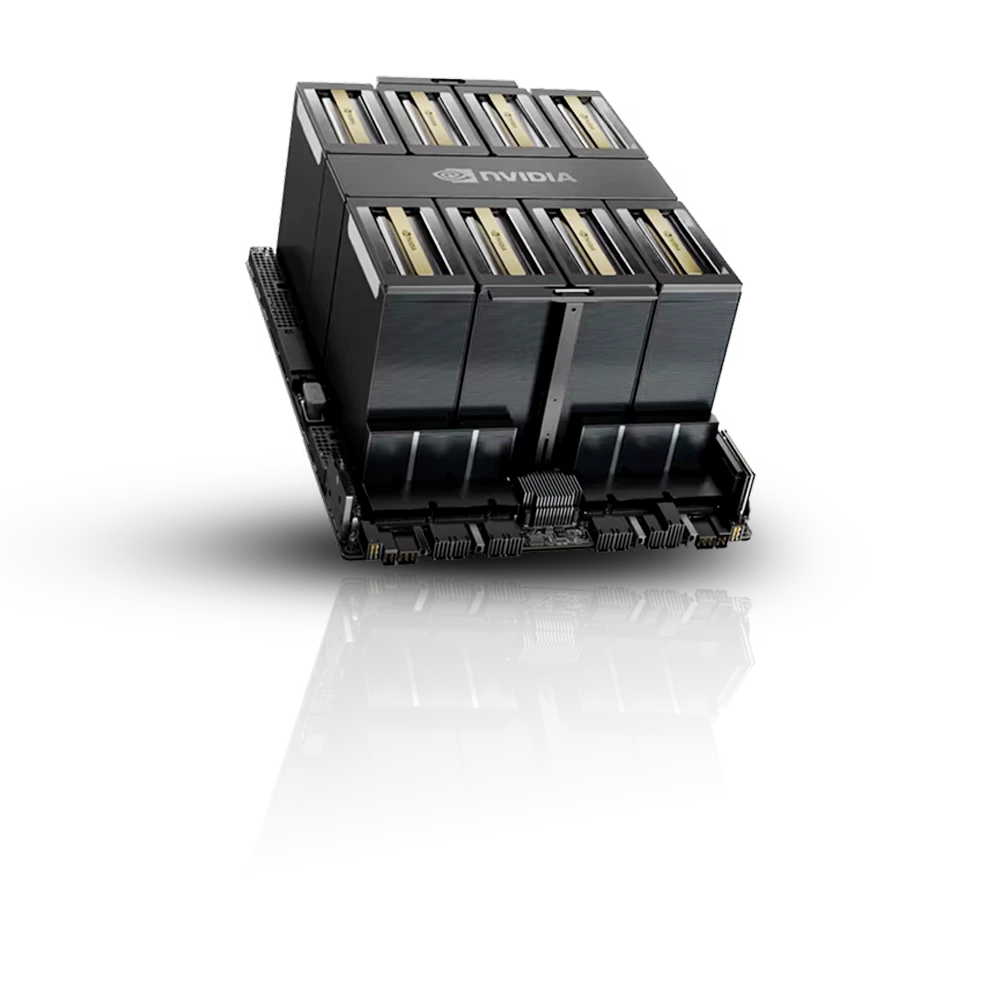
HGX GPU node
GPU generations
4
Architectures
Hopper + Blackwell
Vetted partners
20+
Quote turnaround
24 hrs
Commitment
Short / long
QUOTES IN UNDER 24 HOURS VETTED PARTNERS WORLDWIDE SHORT OR LONG TERM COMMITMENT DIRECT OPERATOR CONTRACTS CAPACITY AVAILABLE NOW PLACEMENT YOU SPECIFY
◆ THE SHORT ANSWER

Agent workloads break the assumptions most GPU sizing is built on. An agent makes many short model calls in sequence rather than one long generation, so latency compounds across a chain and context grows at every step. What that needs is low time-to-first-token and memory headroom for accumulated context, which is a different requirement from batch inference. We have that capacity from vetted partners, at wholesale rates.

+
01
◆ TOKEN CONSUMPTION

What a chain costs against a single call

Every step re-sends the accumulated context, so token consumption compounds with chain length rather than with request count.

Single model call
One prompt, one response
1 unit of tokens
3-step agent chain
Context re-sent at every step
about 4 units
10 steps, small model routing
Small model routes, large model only where needed
about 7 units
10-step agent chain
Tool output accumulates in every prompt
about 20 units
+
02
Where agent capacity earns its keep

What agents demand that batch inference does not.

/01

Production agent serving

Serve agentic workflows that call tools in sequence, where latency compounds across steps and time to first token matters more than peak throughput.
Agentic workflows · tool calling · TTFT
/02

Multi-agent orchestration

Run several agents in parallel with shared state, where concurrency headroom and predictable latency matter more than raw batch throughput.
Multi-agent · LangGraph · CrewAI
/03

Two-tier routing

Serve a small fast model for routing and tool selection alongside a larger one for reasoning, cutting cost without losing capability.
Router model · two-tier · cost control
/04

Evaluation and testing

Run agent evaluation suites and trace replays offline, where a retry costs little and cheaper capacity applies.
Evals · trace replay · offline
+
03
◆ LIVE NETWORK · 12 LOCATIONS

Vetted GPU partners worldwide, sized for chained inference.

Agent traces carry tool inputs and outputs, which are often more sensitive than the prompt itself. Tell us the jurisdiction you need and you contract directly with the operator.

4
GPU GENERATIONS
20+
VETTED PARTNERS
12
PLACEMENT OPTIONS
24h
QUOTE TURNAROUND
USA CAN UK DEU FRA NLD UAE SAU IND SGP JPN AUS
+
04
◆ HOW IT WORKS

A matchmaker, not a marketplace.

We connect you to our vetted partners. You contract directly with the operator running your nodes.

STEP 01/4
01

Tell us the requirement

GPU model, count, placement and timeline. Add workload detail if you have it.

STEP 02/4
02

We match capacity

We find vetted partners with capacity that fits, in the jurisdiction you need.

STEP 03/4
03

Quotes in 24 hours

Real quotes from partners who hold the capacity, not listings that may not exist.

STEP 04/4
04

Contract and provision

You contract directly with the operator. We smooth the provisioning process.

below hyperscale list. Same silicon, wholesale rates.
stop overpaying for compute.
~30%
◆ RATES VARY BY GENERATION, TERM AND PLACEMENT
+
05
◆ FAQ

Frequently Asked Questions

Q1
What matters most when serving agents?

Time to first token, more than raw throughput. An agent chain of ten steps pays your latency ten times over, so a model that answers quickly beats one that answers slightly better but slower. Memory still matters because agents carry long context from accumulated tool output, which is why H200 and B200 often earn their price here.

Q2
How much does running agents cost?

Higher than teams expect, because token consumption compounds. Each step re-sends the accumulated context, so a ten-step chain can consume many times the tokens of a single call. Market-wide the median on-demand H100 rate was $3.33 per GPU-hour across 40 providers as of 31 August 2026. The lever that matters is context management, not hourly rate.

Q3
Why do agent workloads run out of memory?

Context growth. Every tool result gets appended, so by step eight the prompt may be several times its original size, and the KV cache grows with it. Agents that fit comfortably at step one fall over at step ten. Size for your longest expected chain rather than your average.

Q4
Should I use different models for different steps?

Frequently yes, and it is the main cost lever available. A small fast model for routing and tool selection, with calls to a larger model only where reasoning depth is needed, cuts cost substantially. That means capacity for two models rather than one, which changes the sizing.

Q5
What capacity structure suits agent workloads?

Agent traffic needs capacity standing ready, because chains are stateful and an interruption mid-chain loses the accumulated context rather than a single request. Offline evaluation and trace replay are more forgiving. Commitment terms vary by operator.

Q6
Does placement matter for agent workloads?

Yes, for two reasons. Latency, because chained calls multiply any network delay. And jurisdiction, because agent traces contain tool inputs and outputs that are frequently more sensitive than the original prompt, including database queries and internal documents. Tell us the jurisdiction you need and we return rates for capacity there.

◆ GET A QUOTE
Request wholesale rates

in under 24 hours.

Tell us the essentials. We'll line up real quotes from our vetted wholesale partners, and you contract directly with the operator.

Quotes in under 24 hours
Direct contact with operators
Vetted partners, matched to your requirement
20+ vetted providers · 10 regions
Contact
Full Name *
Business Email *
Organization *
Thank you! Your submission has been received!
Oops! Something went wrong while submitting the form.
GPU Requirements
GPU Model *
PRE-SELECTED
Number of GPUs *
Individual GPU count. 1 node = 8 GPUs.
Get the Best Deal
Thank you! Your submission has been received!
Oops! Something went wrong while submitting the form.